
The History & Evolution of Lab-Grown Diamonds
The History and Evolution of Lab-Grown Diamonds
Lab-grown diamonds may feel like a modern innovation, but their story spans decades. Today, they represent the pinnacle of sustainable luxury, but the journey to creating these gems was a long road of scientific breakthroughs.
1. Early Experiments (1950s)
The quest to create diamonds began long before they reached the jewelry world. In the 1950s, General Electric scientists successfully created the first lab-grown diamond. At this time, the crystals were small and yellow—intended primarily for industrial use such as cutting tools and abrasives.
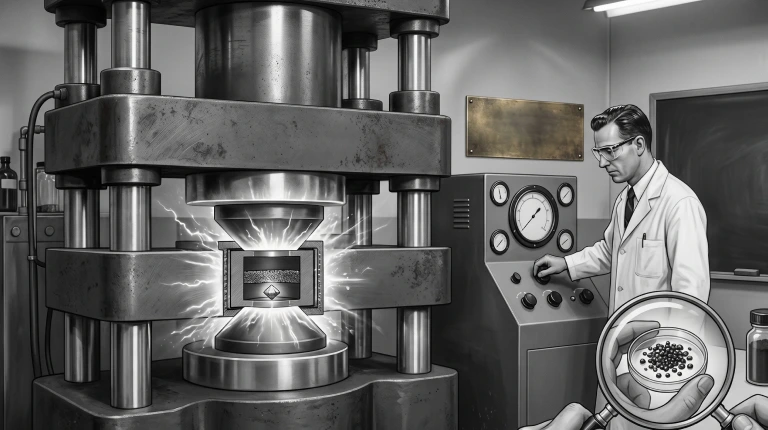
1950s lab-grown diamond experiment
2. From Industry to Jewelry (1980s-90s)
As technology advanced, scientists began to perfect the clarity and color of these stones. By the late 1980s and early 1990s, the first gem-quality diamonds began to emerge. This shift transformed the perception of synthetic stones, moving them from industrial workshops to beautiful luxury necklaces.
3. The 2000s Breakthrough
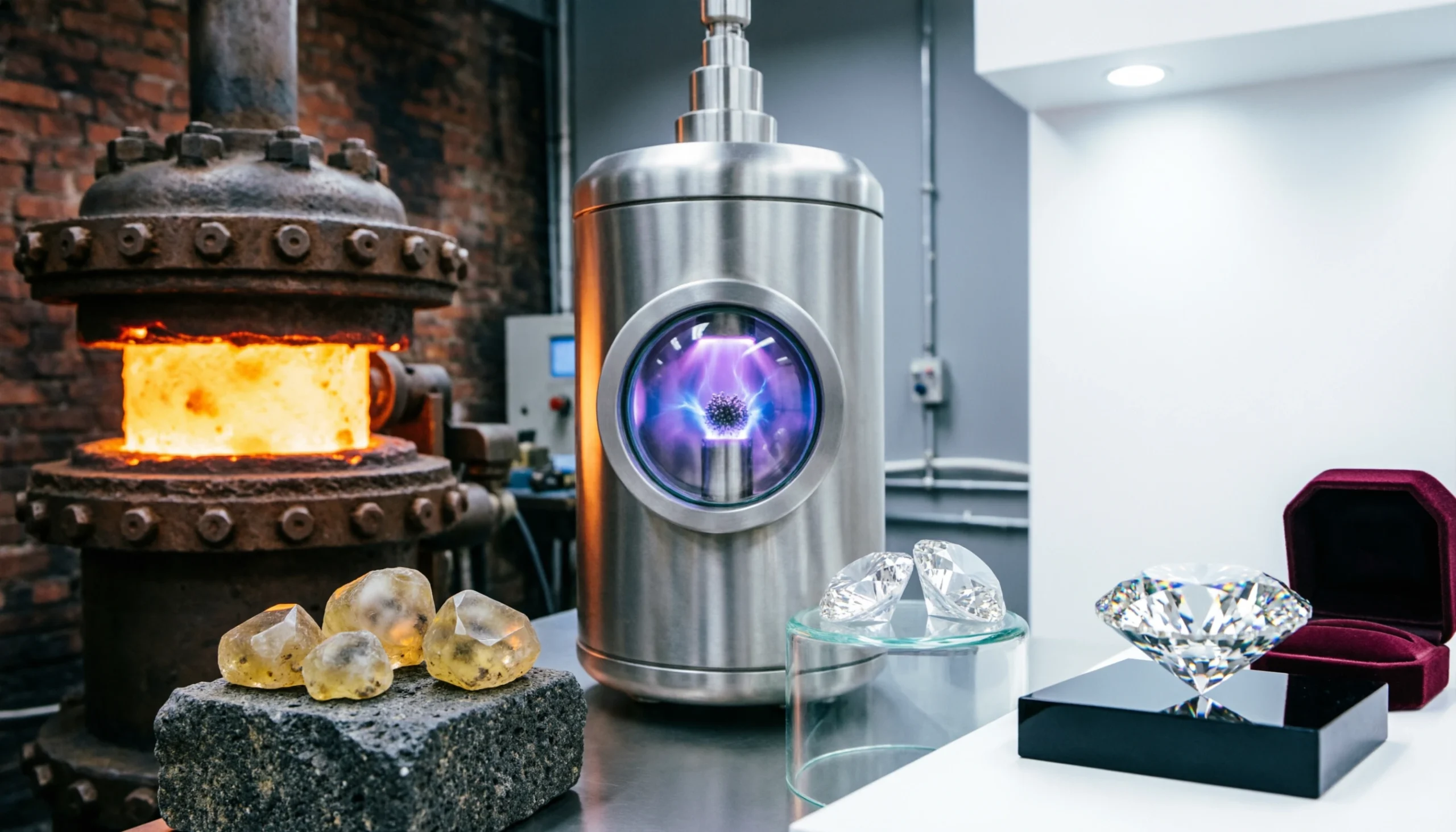
The introduction and refinement of HPHT (High Pressure High Temperature) and CVD (Chemical Vapor Deposition) processes made production significantly more efficient. This era allowed for larger carat sizes and higher clarity, making it possible to create stunning engagement rings that rivaled their mined counterparts.
Lab-grown diamonds enter the jewelry market
4. Today’s Market
Today, lab-grown diamonds are fully mainstream. They are chemically, physically, and optically identical to mined diamonds. They are now certified by leading gemological institutes like the IGI and are the preferred choice for eco-conscious consumers looking for brilliance without the ethical footprint of mining.
5. The Future
With ongoing advances in technology, production is set to become even greener and more affordable. As we look toward the next decade, lab-grown diamonds will continue to define the future of high-end fashion and sustainable luxury.
Raro Jewels and the future of diamonds
Frequently Asked Questions
Who created the first lab-grown diamond?
The first lab-grown diamond was created by General Electric scientists in the 1950s using high-pressure technology.
When did lab-grown diamonds become popular for jewelry?
While they existed for decades, they became significantly popular for fine jewelry in the late 1990s and early 2000s as gem-quality clarity was achieved.