
Lab-Grown Diamonds vs Moissanite – What’s the Difference?
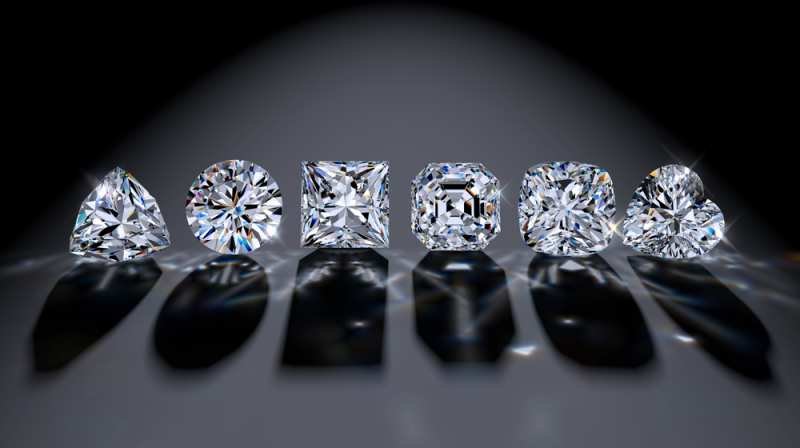
When exploring affordable alternatives to mined diamonds, two gems often come up: lab-grown diamonds and moissanite. While both present ethical and budget-friendly options, they differ in origin, optical effects, durability, price and long-term value. This guide breaks down those differences so you can make an informed choice.
Quick Comparison
Short take: Lab-grown diamonds are chemically and optically diamonds — they match mined diamonds in hardness and prestige, while moissanite is a distinct gemstone (silicon carbide) with stronger rainbow fire and a friendlier price tag. For engagement rings and heirloom pieces, many experts recommend lab-grown diamonds for authenticity and long-term value.
1. Origin
Lab-Grown Diamonds: Produced in controlled laboratory environments using methods such as High Pressure High Temperature (HPHT) or Chemical Vapor Deposition (CVD). These processes recreate the conditions that form natural diamonds, producing stones that are chemically, physically and optically identical to mined diamonds.
Moissanite: A naturally occurring mineral—silicon carbide—first discovered in meteorite craters. Due to its rarity in nature, most moissanite on the market is lab-created. It’s a unique gemstone with its own chemical structure and optical behavior, separate from diamonds.
2. Sparkle
Sparkle — or how a gem reacts to light — is one of the most visible differences:
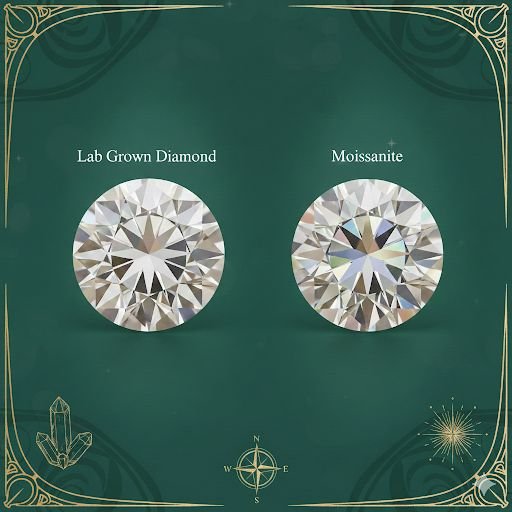
- Lab-Grown Diamonds: Exhibit the classic white brilliance and fire associated with diamonds. The sparkle tends to be more refined and "diamond-like" (less colorful dispersion).
- Moissanite: Displays stronger dispersion (rainbow flashes) which can appear extremely lively — sometimes described as "disco ball" sparkle. This makes moissanite especially eye-catching under direct light, but it’s visually distinct from diamond brilliance.
3. Hardness & Durability
For everyday wear — especially engagement rings — durability matters:
- Diamonds (Lab-Grown or Mined): Score a 10 on the Mohs hardness scale — the hardest known natural material. Excellent resistance to scratching and long-term wear.
- Moissanite: Ranks around 9.25 on the Mohs scale — very durable and suitable for daily wear, but slightly less hard than diamonds and more prone to microscopic wear over many decades.
4. Price
Price differences are often a major deciding factor:
- Lab-Grown Diamonds: Typically 30–40% less expensive than comparable mined diamonds — offering real diamond quality at a lower price point.
- Moissanite: Generally even more affordable than lab-grown diamonds, offering a high-impact look for a fraction of the diamond price. Note: it’s categorized and valued differently since it’s not a diamond.
5. Value & Sentiment
Both emotional and monetary value play into buying decisions:
- Lab-Grown Diamonds: Are real diamonds and tend to carry the same social symbolism, prestige and resale perception as mined diamonds (though resale values vary).
- Moissanite: A beautiful gemstone that many buyers choose for visual impact and cost savings, but it’s usually perceived as an alternative—not a diamond—so sentimental framing differs.
Recommendation: At Raro Jewels, we recommend lab-grown diamonds for engagement rings where authenticity and timelessness matter most.
Why Customers Choose Raro Jewels
Raro Jewels focuses on transparency and certification. Our lab-grown diamonds are IGI-certified, hand-selected for cut and brilliance, and backed with clear information so you can choose confidently. Explore our engagement ring collection and learn more about lab-grown diamonds: .
Frequently Asked Questions
Which sparkles more, moissanite or lab-grown diamonds?
Moissanite has more rainbow sparkle (higher dispersion), while lab-grown diamonds offer the classic white brilliance associated with diamonds.
Is moissanite a fake diamond?
No — moissanite is a real gemstone (silicon carbide), but it is not a diamond.